
Innovation

What The Chief Experience Officer Brings to Hospital Systems

Ron Shinkman

// By Ron Shinkman // As hospital systems have merged and grown over the years, so have the number of executives occupying their C-suites. The chief information officer (CIO) was a creation of the 1990s, as hospitals began relying on electronic medical records. A more recent admittee to the C-suite is the CXO, or chief experience officer. Like the rise of the CIO, the CXO is a response to changing times in the health care sector.

Acute Care Telehealth: A Lifeline for Struggling Hospitals?

Teresa Rincon, RN, PhD, FCCM, assistant professor at the University of Massachusetts Medical School, Graduate School of Nursing, and senior telehealth consultant with Blue Cirrus Consulting

Acute care telehealth expands access to care by connecting community hospitals with specialized experts, which helps to close gaps in knowledge and keep care local. When patients in a rural community get sick and need access to intensive care or specialized care, the typical small community hospital — if there is one — doesn’t have Read More

Acute Care Telehealth Expands Access in Community Hospitals

Jane Weber Brubaker

// By Jane Weber Brubaker // When patients in a rural community get sick and need access to intensive care or specialized care, the typical small community hospital — if there is one — doesn’t have experts on-site to manage their care needs — and transferring them to a large tertiary care center may not be an option if no beds are available. In these instances, acute care telehealth is helping patients receive the right care without having to leave their local community, a benefit to the patient, their family, the local hospital, and the tertiary care center.

Northwell Health Takes the Lead on Gun Violence Prevention to Drive Awareness and Education Nationally

John Marzano

// By John Marzano // The politics surrounding gun ownership and control are infinitely polarizing. Yet, one truth believed by all Americans is that the use of guns and other weapons to inflict mass casualties and destruction of human life has no place in a peaceful, civilized society. Especially when it pertains to our children — our future. “Gun violence is now the leading cause of death for children and adolescents,” said Michael Dowling, president & CEO of Northwell Health, kicking off this year’s Gun Violence Prevention Forum in February. Since 2019, Dowling has put himself and New York’s largest health system at the forefront of leading a coalition of more than 1,000 hospital and health system partners to raise broad awareness of the crisis of gun violence.

Managing Change in Health Care: What Does It Take to Overcome the Barriers?

Pamela Landis, senior vice president of digital engagement at Hackensack Meridian Health

Change happens. And it should, as internal and external forces inevitably alter an organization and the constructs it operates in. Managing change in health care can be a risky and uncomfortable process. But to face today’s many challenges, change is often necessary. Health care is in a constant state of flux. New technologies, best practices, Read More

AI in Health Care: 4 Things to Consider for Your Future Content

Rachael Sauceman is director of strategy for Full Media

You get into work, grab your coffee, boot up your computer, and look at your to-do list for the day. The one and only thing you’ve left for yourself on the to-do list is the thing you’ve been putting off for days — weeks even: Write that blog on the dangers of high blood pressure. Read More

Taking the Chaos Out of Change

Cheryl L. Serra

// By Cheryl L. Serra // Change happens. And it should, as internal and external forces inevitably alter an organization and the constructs it operates in. Health care is in a constant state of flux. New technologies, best practices, staffing structures, and financing all contribute to new ways of doing business. But managing change is an ongoing challenge for health care organizations.

Four Questions to Ask Before Using AI-Generated Content in Health Care

4 Questions to Ask Before Using AI-Generated Content in Health Care

// By Rachael Sauceman // You get into work, grab your coffee, boot up your computer, and look at your to-do list for the day. The one and only thing you’ve left for yourself on the to-do list is the thing you’ve been putting off for days — weeks even: Write that blog on the dangers of high blood pressure. Now instead, imagine that your process looks like this: You open a browser and go to your favorite AI platform, like the buzzy ChatGPT, which has recently become a media sensation, leading to a multibillion-dollar investment from Microsoft. You type in a series of questions for ChatGPT to answer:

Making Health Care Better for Underserved Communities: Viewpoints from HLTH 2022

Sachin Jain, MD, MBA, president and CEO, SCAN Group & Health Plan

// By Jane Weber Brubaker // Which is better — Medicare Fee-for-Service (FFS) or Medicare Advantage (MA)? Sachin Jain, MD, MBA, president and CEO of SCAN Group & Health Plan, doesn’t think it’s the right question. “We all know we have a broken health care system, and we have to try in our own ways to make it better,” he says. Jain was joined by Cheryl Pegus, MD, MPH, executive vice president of Health & Wellness at Walmart, in a session at HLTH 2022 in November, “Removing the Filter from the Business of Healthcare.” The panel discussion was moderated by Matthew Holt, founder/author of The Health Care Blog.

Moffitt Cancer Center’s Health Equity Program Gives Business Opportunity to Improve Health of Local Communities

Althea Fung

// By Althea Fung // Although cancer affects all populations in the United States, because of various social, environmental, and economic factors, some groups bear a disproportionate burden of the disease than others. For example, Black men are twice as likely to die from prostate cancer than non-Hispanic White men. In addition, Hispanic women are 40 percent more likely to be diagnosed with cervical cancer and 30 percent more likely to die from the disease than non-Hispanic White women. Over the years, many organizations have tried to implement programs and interventions to address health inequities in cancer care and other clinical areas. But many programs have fallen short due to various factors, including funding.

Has Your Health System Adopted Person-Centered Care?

Marcia Nelson, MD, chief medical officer, Enloe Medical Center

If we’ve heard it once, we’ve heard it a thousand times: Health care is complex, dysfunctional, and slow to change. But one person can still make a difference. For Angelica Thieriot, it took a horrific experience as patient in a U.S. hospital in 1978 for her to imagine how different things could be if patients Read More

44 Years of Person-Centered Care: The Power of Planetree to Transform Organizations

Jane Weber Brubaker

// By Jane Weber Brubaker // If we’ve heard it once, we’ve heard it a thousand times: Health care is complex, dysfunctional, and slow to change. But one person can still make a difference. For Angelica Thieriot, it took a horrific experience as patient in a U.S. hospital in 1978 for her to imagine how different things could be if patients came first. Long before the term “patient experience” became a thing, Thieriot, a native of Argentina, took it upon herself to change things for the better in the U.S.

Remote Patient Monitoring: Improving Outcomes and Reducing Costs

Richard Milani, MD, chief clinical transformation officer and vice chair of Cardiology, Ochsner Health

COVID escalated implementation of remote patient monitoring (RPM). Now, with the door pushed open, healthtech companies are competing to burst through and build clinical partnerships that stretch the boundaries of digital health. The potential for mobile health, which includes smartphone apps, wearables, and other monitoring devices, is massive. The percentage of physicians who feel digital health Read More

Ochsner Health Expands Remote Patient Monitoring to New Patient Groups, with Improved Outcomes and Reduced Costs

Marcia Simon

// By Marcia Simon, APR // COVID escalated implementation of remote patient monitoring (RPM). Now, with the door pushed open, healthtech companies are competing to burst through and build clinical partnerships that stretch the boundaries of digital health. The potential for mobile health, which includes smartphone apps, wearables, and other monitoring devices, is massive. The percentage of physicians who feel digital health tools are an advantage for patient care grew from 85 percent in 2016 to 93 percent in 2022, according to recent findings from the American Medical Association, citing clinical outcomes and work efficiency as top factors. The AMA study found that nearly one-third of physicians across a wide range of specialties currently use remote monitoring devices for patients, up from 12 percent in 2016.

How to Set Your Health System Apart From Competitors? Try Niche Marketing

Jeff Bean, vice president for system marketing & brand, Geisinger

If niche marketing is defined as the business of promoting and selling a product or service to a specialized segment of a market, then Geisinger has powered its expertise for a specific population and area that is expected to grow going forward. Northeast Pennsylvania (NEPA) is rapidly becoming a distribution and shipping hub for e-commerce Read More

Geisinger 65 Forward Senior-Focused Primary Care Is Pure Niche Marketing

John Marzano

The over-65 population in northeast Pennsylvania is expected to double in the next decade. Geisinger is ready. // By John Marzano // Northeast Pennsylvania (NEPA) is rapidly becoming a distribution and shipping hub for e-commerce to reach roughly 60 percent of the U.S. within a day’s drive. Think Amazon Prime for a 1-to-2 day delivery Read More

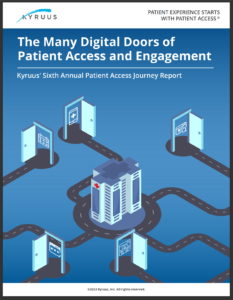
Report Download: Kyruus’ 2022 Patient Access Journey Report

// Sponsored Post //

Digital self-service is a key part of the entire patient access journey—from scheduling to pre-visit tasks. New research from Kyruus highlights just how important self-service options are to consumers when finding, selecting, and accessing care.

For more insights on the pivotal role of digital channels across the patient access journey—download the report.

Download now »

For Health Care Marketers, SHSMD 2022 Was a Chance to Reflect and Recharge

Jane Weber Brubaker

The art of planning a conference involves taking the pulse of an industry, reflecting on the major themes, and creating a program that recharges attendees with inspirational ideas and the opportunity to build deeper connections with each other, and challenges them to think differently and consider fresh perspectives. At this year’s SHSMD Connections, it was Read More

Remote Patient Monitoring: Has the Tipping Point Arrived?

Chintan Prajapati is a Senior Solutions Architect at Apexon

Remote patient monitoring — inside and outside the four walls of a hospital, with real-time connections between patients and providers — offers benefits to both. During the pandemic, hospitals needed to efficiently provide care to more patients without compromising safety, doctor-patient engagement, quality of care delivery, and patient satisfaction. Higher consumer expectations, increased digitization, and Read More

SHSMD Connections 2022: An Industry Reboot

Suneel Gupta headshot

Four keynote speakers encourage conference attendees to rebalance, reassess, rebound, and reset. // By Jane Weber Brubaker // The art of planning a conference involves taking the pulse of an industry, reflecting on the major themes, and creating a program that recharges attendees with inspirational ideas and the opportunity to build deeper connections with each Read More

How to Improve Outcomes and Exceed Patient Expectations with RPM and IoT

apexon-logo

Real-time connections between patients and providers — inside and outside the four walls of hospitals — offer benefits to both. What are the strategic implications? // By Chintan Prajapati // Higher consumer expectations, increased digitization, and the Covid-19 pandemic have all contributed to the trend toward monitoring patient health remotely. This new frontier has ushered Read More

Report Download: Service Line Growth: Optimized Search & Social Campaigns Supercharge Health Risk Assessments

// Sponsored Post //

Heath Risk Assessments offer an effective way to educate and motivate at-risk patients to take action to improve their overall health – and our Heart Health Assessment, one of our most popular HRAs, is no exception.

Discover how a year-long Google & Facebook campaign generated impressive Heart Health risk assessment traffic, completions and appointments.

Download now »